Neuroscience breakthrough: Scientists challenge 150-year-old brain theory and move closer to speech restoration
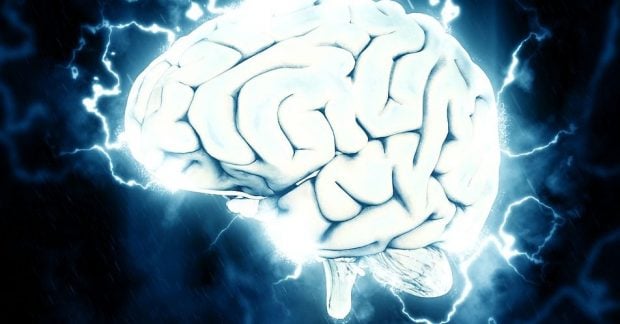
UCSF researchers discovered a brain region that maps out words before speech, potentially transforming neurotech and medical treatments.
 💡Tech
Photo: UNIAN
Key points
- UCSF researchers identified a brain region that maps speech words prior to articulation.
- The findings challenge the century-old assumption of strict separation between language comprehension and production.
- The discovery could pave the way for advanced brain-computer interfaces to restore speech.
Researchers at the University of California, San Francisco (UCSF), have made a groundbreaking discovery in neuroscience that challenges a 150-year-old understanding of how the human brain processes speech. Led by Edward Chang, the team found that the brain systems responsible for understanding and producing language are interconnected much more tightly than previously believed.
A new role for Wernicke's area in speech planning
Published in Science, the study focused on a small subsection within Wernicke's area known as the left posterior superior temporal gyrus (lpSTG). The scientists discovered that neurons in this region activate about a quarter of a second before a person begins speaking, forming a phonetic plan of the upcoming word rather than simply processing meaning or monitoring sounds.
Traditionally, Wernicke's area was viewed primarily as a center for language comprehension, while speech production was thought to occur elsewhere. The new findings reveal that perception and generation overlap closely, explaining how humans seamlessly convert heard words into spoken ones.
Medical and technological implications
These findings could significantly improve surgical mapping to protect critical speech zones during brain operations. Furthermore, lpSTG could serve as a novel target for brain-computer interfaces (BCIs), offering an alternative signal source for paralyzed individuals who have lost the ability to speak.
"This discovery helps solve a long-standing riddle in neuroscience," researchers noted, highlighting the potential for future bidirectional communication interfaces.
Source UNIAN — unian.ua/science/vcheni-znayshli-v-mozku-zonu-yaka-po-inshomu-vpliv… ↗
Read next
 🎭Culture & Sport
Apple TV+ Unveils Teaser for 'Presumed Innocent' Season 2: New Cast and 2027 Release Date
The acclaimed legal thriller returns as an anthology series featuring a new murder case and a star-studded cast led by Rachel Brosnahan.
 🚨Events
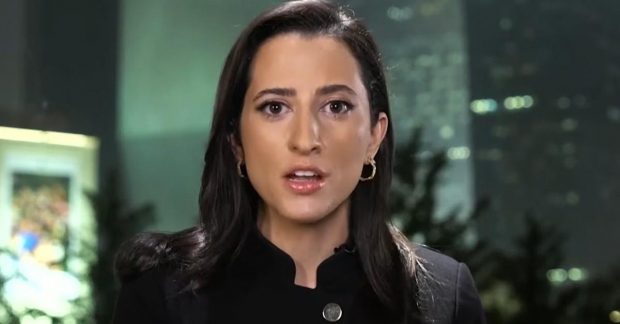
Bloomberg Journalist Banned from China Summit Over Nvidia Scandal Question
Bloomberg's chief political correspondent Annmarie Hordern was barred from a high-profile trilateral summit following a sharp question about Nvidia's founder.
 🚌Transport
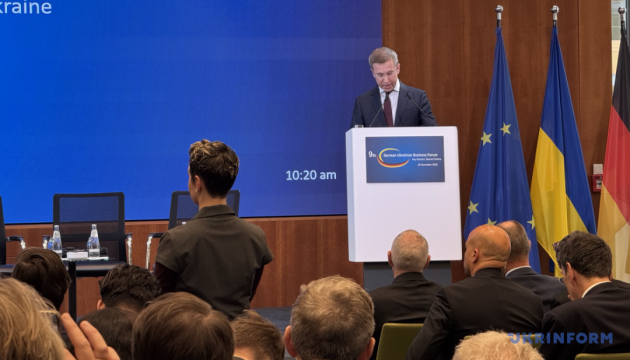
Ukraine Seeks to Deepen Rail Modernization Cooperation with Deutsche Bahn
The Ukrainian Prime Minister emphasized the importance of expanding the strategic partnership with German rail operator Deutsche Bahn during the German-Ukrainian Business…
 🚌Transport
Cat Road Sign: What This Unusual Driver Warning Means
Certain European communities have introduced a new warning road sign featuring a cat inside a red triangle to protect animals and slow down traffic.
 💼Economy
Official NBU Exchange Rates: Hryvnia Strengthens Against US Dollar and Euro
The National Bank of Ukraine has set the official exchange rates for November 23, recording a slight strengthening of the hryvnia against both the US dollar and the euro.
 🛡️Security
Donald Trump's Remarks on Missile Incident in Poland Spark International Debate
US President Donald Trump called the fall of Russian missiles in Poland a mistake, commenting on Polish Prime Minister Donald Tusk's criticism.