Trump Claims 'Special Chemistry' in Relations with Putin and Xi Jinping
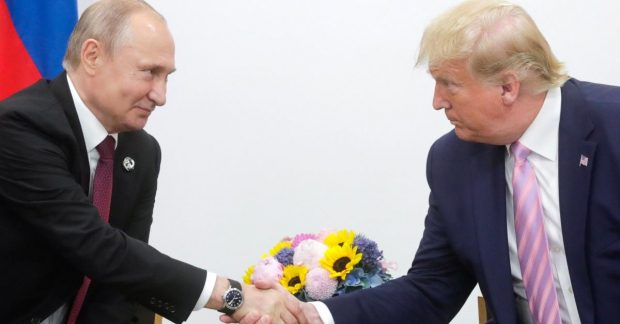
US President Donald Trump defended his personal ties with the leaders of Russia and China, describing them as a strategic advantage for national security.
 🚨Events
Photo: UNIAN
Key points
- Trump defended his personal rapport with Putin and Xi as a benefit to US security.
- The President described an 'electric current' and unique friendship during a trilateral summit in China.
- Trump dismissed critics of his diplomatic style as 'stupid people' who fail to see the value of dialogue.
US President Donald Trump has defended his policy of fostering personal relationships with leaders of nations traditionally viewed as Washington's geopolitical rivals. Speaking to reporters at the White House on November 20, the American leader emphasized that he views friendly contacts with Vladimir Putin and Xi Jinping not as a threat, but as a strategic asset for the country.
Responding to criticism regarding his comments about friendship with the Russian leader, Trump labeled his detractors as "stupid people." He maintained that the ability to get along with key global players contributes to the stability and security of the United States. "We have a very great relationship. That’s a positive, by the way," the President stated, adding that he successfully interacts with both Russia and China.
'Electric Current' of Trilateral Talks
Trump paid particular attention to memories of a trilateral meeting held during his visit to China. According to him, this format marked the first time in history that the leaders of the US, Russia, and China gathered together to discuss global issues. The President expressed conviction that the personal factor helped resolve several significant disagreements between the nations.
Describing the atmosphere of those negotiations, Trump used vivid metaphors. "There was such chemistry between us, such an electric current, such a friendship as had never been seen before," he noted. In his view, the event was "amazing" and demonstrated the potential for effective communication between the world's three most powerful states for the sake of international security.
However, when asked directly whether he considers Putin a friend specifically to America as a nation, Trump responded cautiously. He remarked that he could not speak for the entire country but confirmed the existence of strong personal ties with the Kremlin leader. This stance has raised concerns among analysts, with The Times noting that such flirtations could have negative implications for European security.
It is worth noting that during the aforementioned summit in China, the parties discussed international law and order and the coordination of security efforts. Despite the US President's optimism, his rhetoric regarding "friendship" with dictators remains a subject of intense debate in Washington and among NATO allies.
Source UNIAN — unian.ua/politics/tramp-pohvalivsya-druzhboyu-z-putinim-i-nazvav-kr… ↗
Read next
 🛡️Security
Energy workers restore power in Rivne region following enemy attack
Power supply has been fully restored in the Sarny district of the Rivne region after being disrupted by a Russian attack on November 20.
 👥Society
Autumn Rose Care: Expert Advice for Drohobych Gardeners
Experts explain why gardeners should avoid radical pruning of roses until persistent frosts set in.
 🛡️Security
Rescue operation in Dymer: 89-year-old woman pulled from the rubble
Search operations continue in the village of Dymer, Kyiv region, following a drone strike on a residential building. The death toll has risen to nine.
 🛡️Security
Russian corvette 'Merkury' in Libya: Likely hit by Ukrainian drones
An explosion occurred on a Russian warship in the Libyan port of Benghazi, which, according to Associated Press, may have been the result of a Ukrainian maritime drone at…
 🏛️Politics
Russia tests NATO defense algorithms through airspace violations, says Dmytro Kashchenko
Russian provocations involving missiles and drones over NATO territory are aimed at testing the Alliance's readiness and response mechanisms.
 🏙️City
Global Warming and the 'Awakening' of Ancient Bacteria: New Research Findings
Researchers from the University of Colorado discovered that bacteria frozen in permafrost for 40,000 years can regain activity when temperatures rise.